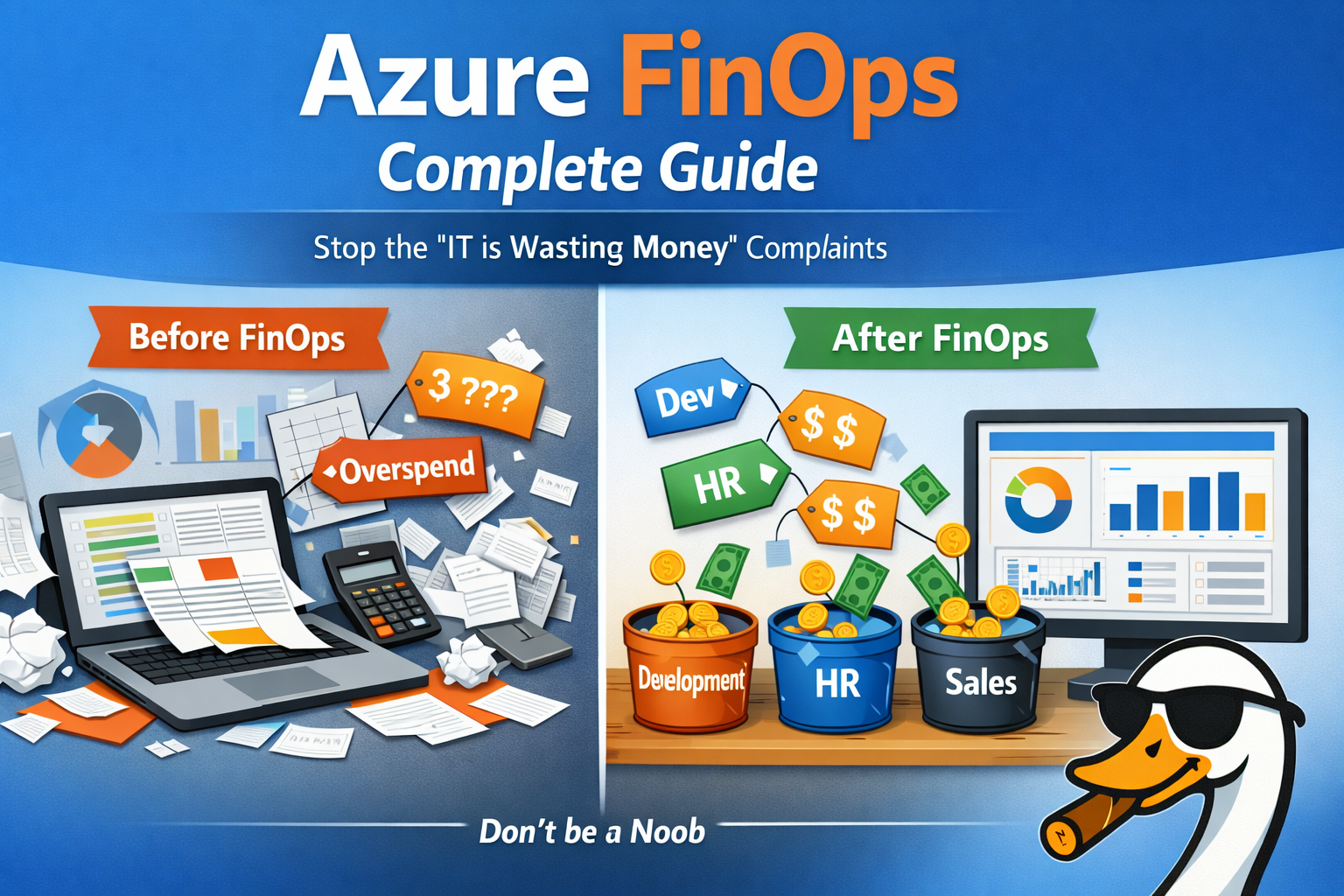
Short Answer: Azure FinOps is cost visibility + allocation + governance for cloud spending. In regulated industries (banking, healthcare), this means building custom solutions because Microsoft's native tools assume you control your subscription structure—which regulated enterprises never do. Subscriptions serve as security boundaries, not cost centers, breaking Microsoft's cost allocation model.
Why Azure FinOps is harder than AWS FinOps
AWS approach: Consolidated billing with cost allocation tags that work universally across accounts.
Azure reality: Security boundaries = subscription boundaries = cost reporting nightmare. You can't consolidate billing across subscriptions in regulated environments, making application-level cost tracking require custom KQL queries and tag governance.
Real impact: Organizations spend more on allocation tooling than they save in optimization because Azure Cost Management can't answer "What does Application X cost across 6 subscriptions?"
What breaks at enterprise scale
- Azure Cost Management shows subscription costs, not application costs — Finance wants "Payroll app monthly cost." Azure shows "Production subscription $47K." These don't align.
- Resource tagging fails without enforcement — Teams deploy resources without tags. Six months later, finance can't allocate $200K in untagged spend.
- Chargeback models nobody accepts — IT creates allocation formulas finance rejects because they don't match budget authority or GL accounts.
This hub contains the cost allocation strategies, tag governance frameworks, and KQL queries I've built to make Azure FinOps work in enterprise environments where subscriptions are security boundaries, not billing units.